Technology
Machines flag. People decide.
Satellites, machine learning and open-source intelligence watch the Mediterranean around the clock. An analyst confirms every finding before it is reported.
What we can see
Six signals. One watch.
From orbit, from the records and from the shore — one system watches for every kind of harm we pursue.
01Radar
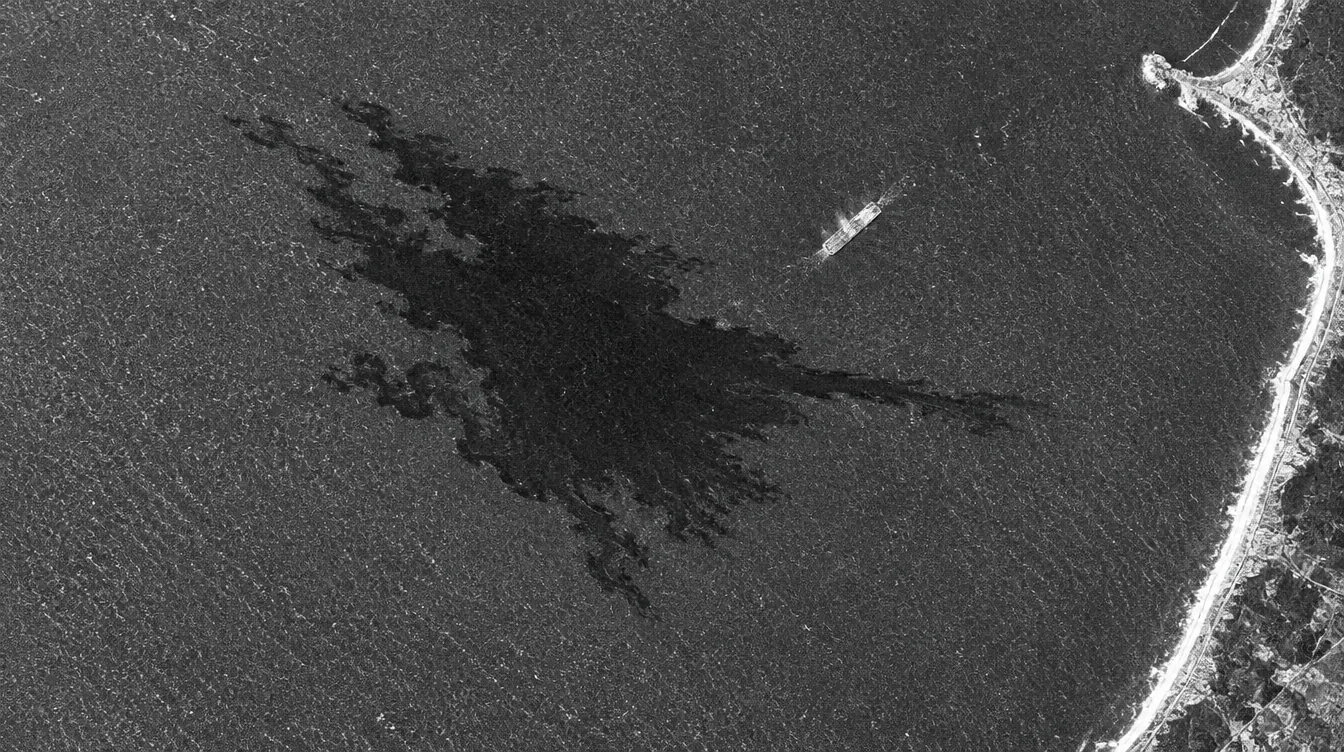
Oil slicks and illegal discharges
Oil calms the sea surface, so a slick reads on radar as a dark streak — by day or night, through cloud.
02AIS gap analysis
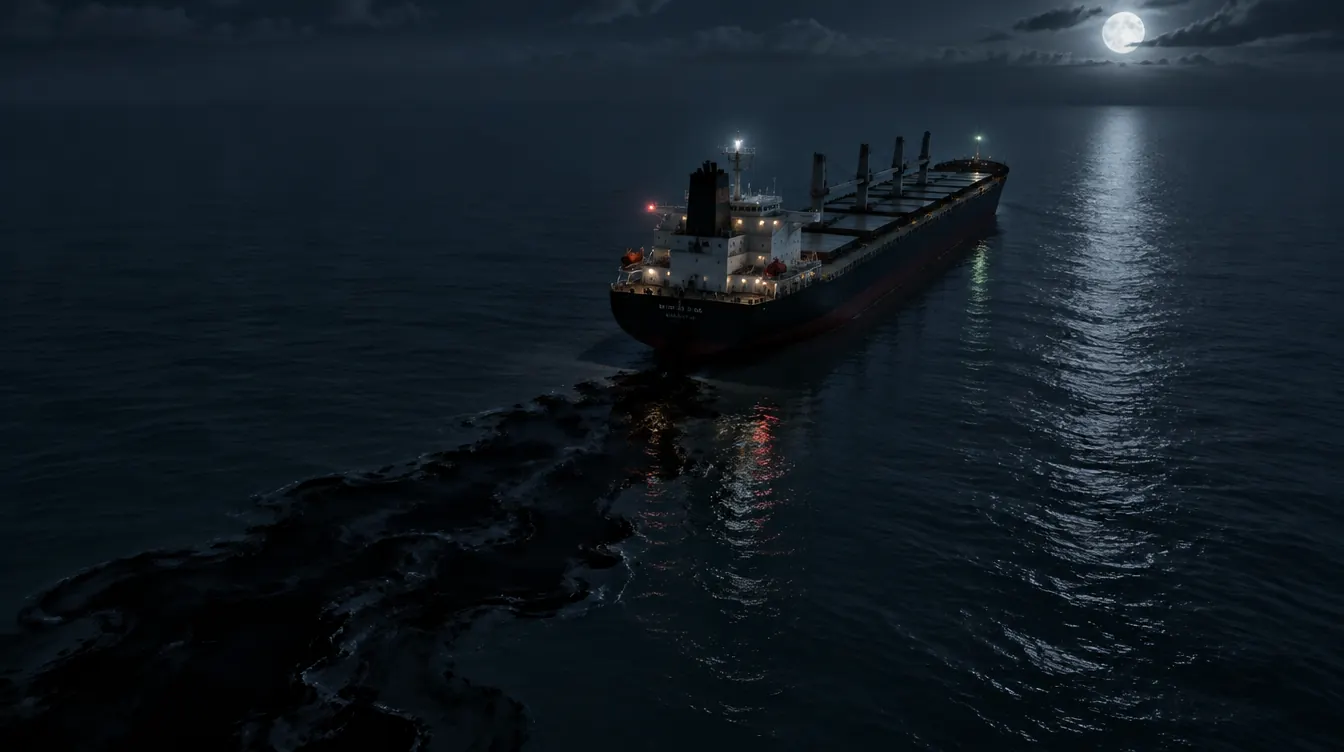
Dark vessels
A ship that switches off its transponder still shows on radar. We work out which ship it is.
03Track analysis
Ship-to-ship transfers
Two vessels meet far from port, lie alongside with transponders off, then part. The pattern stands out.
04Optical imagery
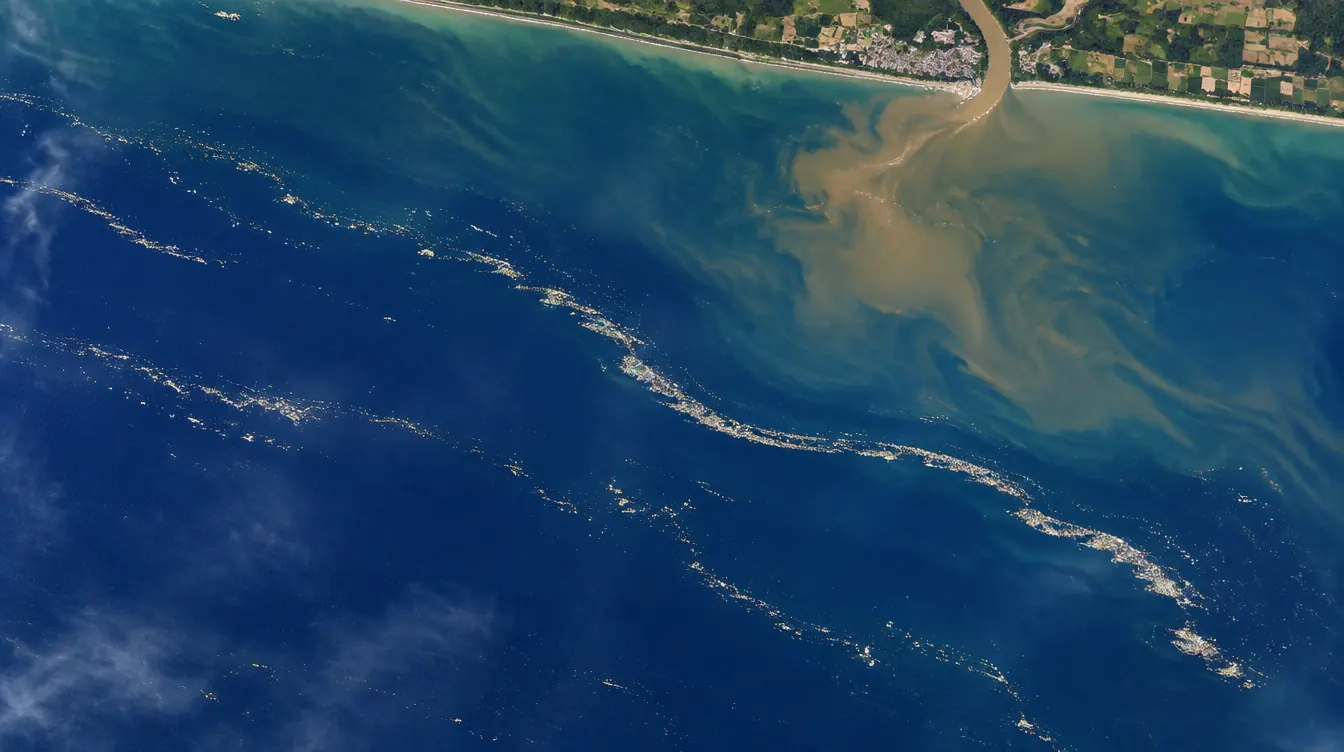
Floating marine litter
After heavy rain, lines of floating debris gather off river mouths. Optical satellites map them.
05Change detection
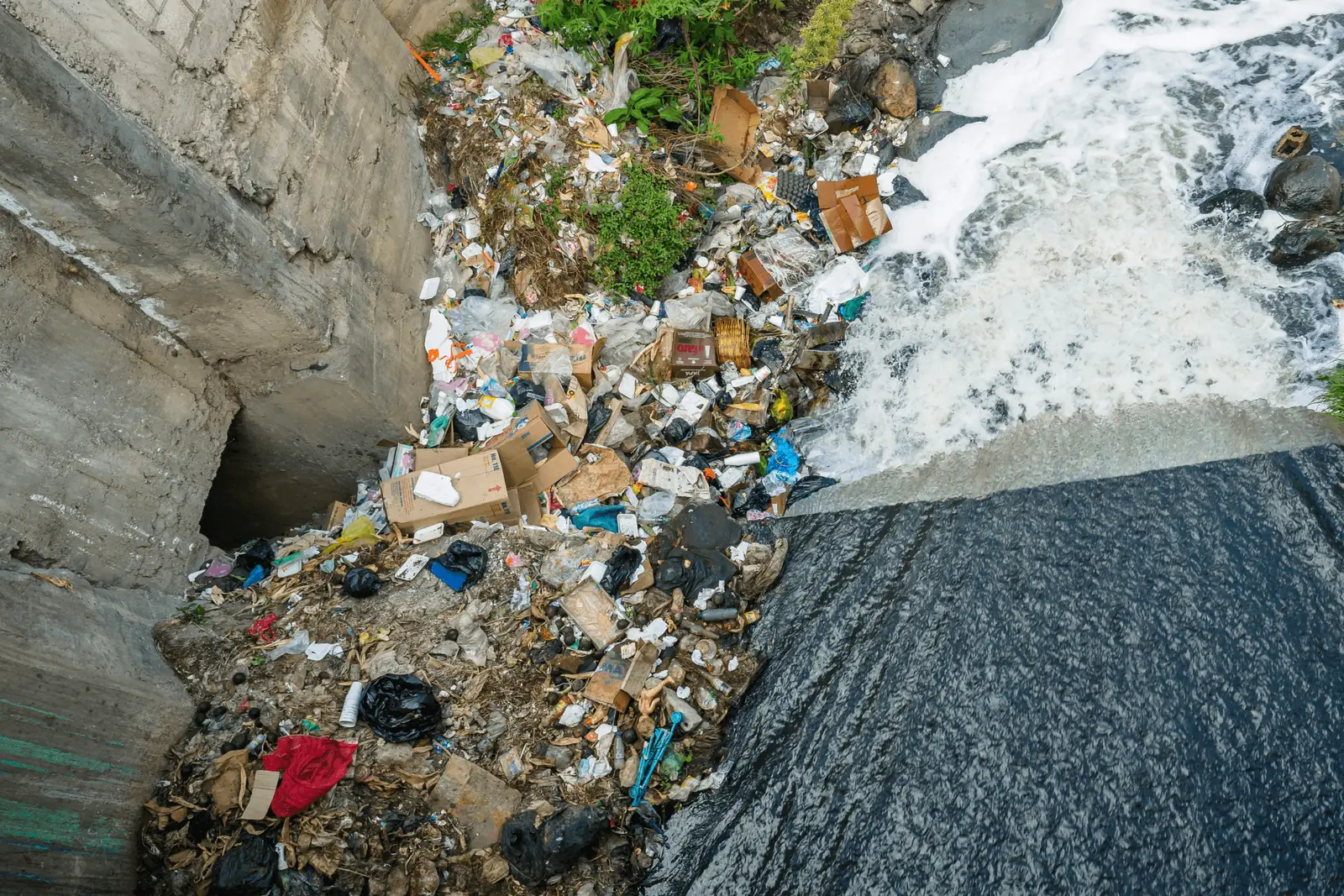
Illegal dumping on the coast
Fresh waste on a beach or in a gully shows up as change between two passes over the same shore.

06Open sources
Citizen and open‑source reports
Photos from the shore, public posts, registries and port records join the same evidence trail.
Machine learning
Signal from noise.
Most dark patches on radar are not oil. A classifier scores each one against the look-alikes, and only a strong case reaches an analyst.
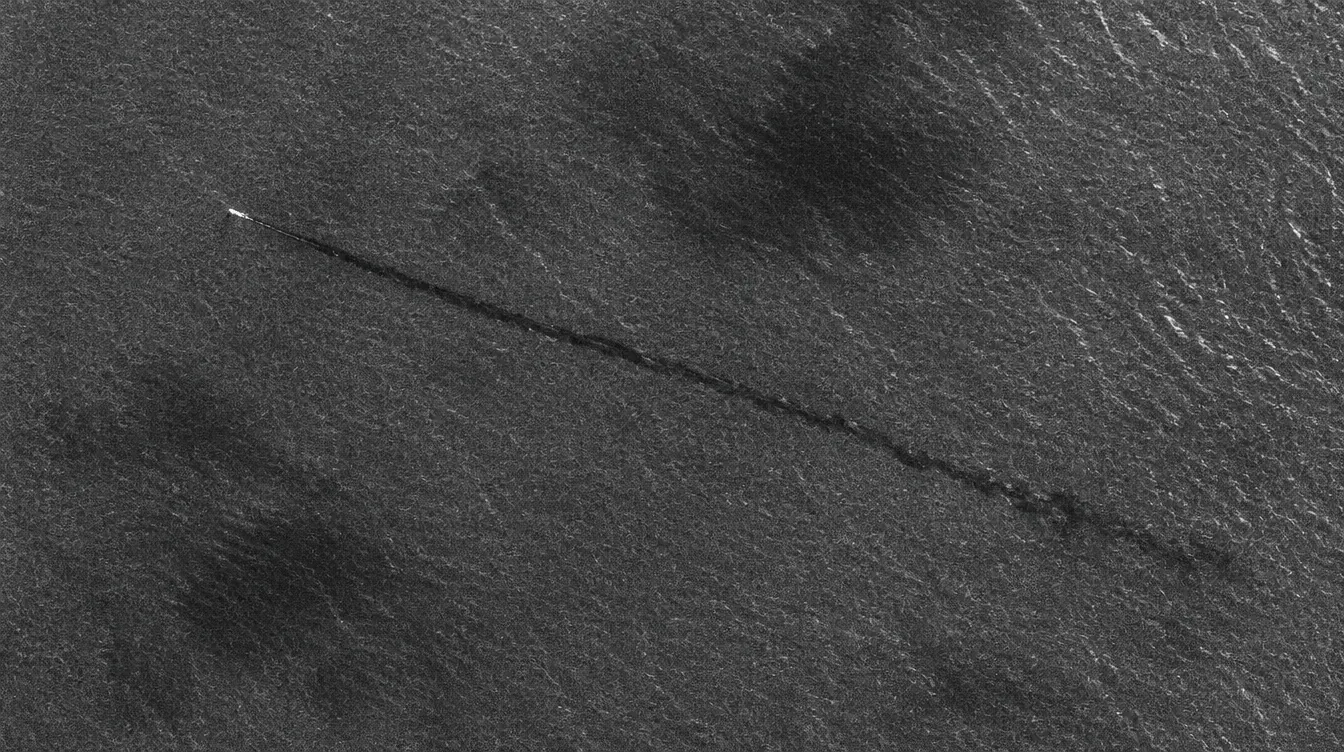
Candidate review4 dark patches
- 1 Low wind 0.06 Rejected
- 2 Algal film 0.12 Rejected
- 3 Rain cell 0.09 Rejected
- 4 Mineral oil 0.94 To analyst
One case goes to an analyst.
Dark vessels
Even with AIS off.
A ship can switch off its transponder. It cannot switch off its past.
- 01
The hull still shows.
A transponder can be switched off. A radar echo cannot: size, heading and position are measured.
- 02
Years of tracks.
The echo is compared with years of historical AIS tracks, behaviour patterns and port calls in the same waters.
- 03
One ship fits.
Size, heading and route narrow the field until a single vessel matches.
- 04
Then, who is behind it.
Owner and manager, flag, insurer, sanctions lists and port-state records complete the dossier.
MEPA Clarity
Clearer scenes. Original evidence.
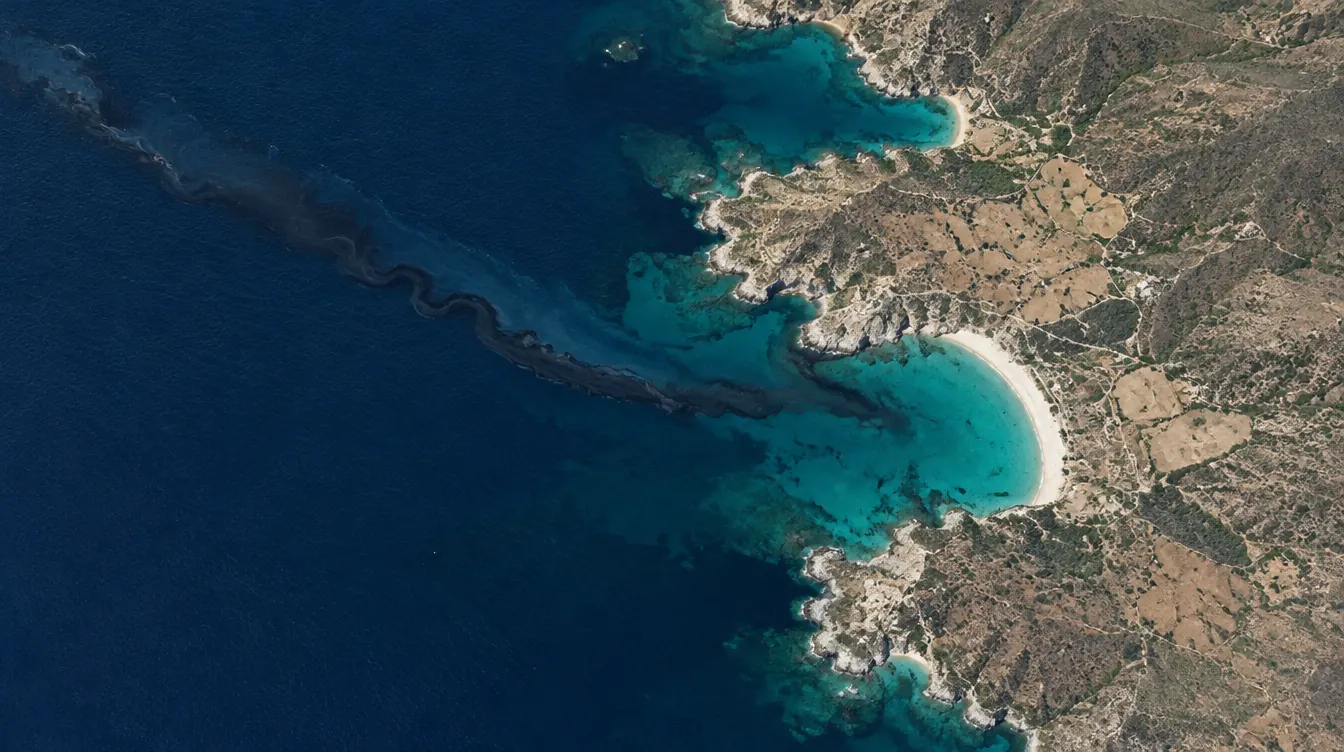
MEPA Clarity is our enhancement pass. Super-resolution and denoising make every scene legible for analysts — while the original pixels stay with the evidence, untouched.
Super-resolution
Fine structure — a hull, a wake, the edge of a slick — resolved from coarse pixels.
Denoising
Radar speckle and sensor noise removed, so faint features read clearly.
Originals kept
Every untouched source file is hashed and kept with the evidence.
Automated reporting
From detection to authority, automatically.
Once an analyst confirms a finding, the rest runs on rails: the evidence is packaged, sealed, delivered and followed up.
- 01
Detect
Every radar and optical pass is screened for dark patches, litter and change on the coast.
- 02
Classify
The classifier scores each candidate against look-alikes. Weak ones stop here.
- 03
Attribute
AIS tracks, dark-vessel matching and drift back-tracking on wind and current models point to a source.
- 04
Verify
An analyst confirms the finding. When it matters, PolarVector verifies on the ground.
- 05
Package
Acquisitions, the AIS and dark-period timeline, the drift model and the vessel dossier are sealed with SHA-256 and logged for chain of custody.
- 06
Submit
The package goes to the authority that can act: the coastal state, EMSA CleanSeaNet, the port or the flag state.
- 07
Follow up
We track the response, and keep asking until the case is addressed.

Our investigative arm
PolarVector
When digital intelligence is not enough, our investigations partner works lawfully on the ground — so the evidence holds up before authorities.
Vessel intelligence
Histories, movements and port calls of the ships we flag.
Ownership & sanctions
Owner and manager chains, screened against EU, UK and US lists.
On the ground
Lawful verification in ports and on the coast, so the evidence holds up.
Report
Seen something the satellites missed?
Send it to us. Your report enters the same pipeline — verified, documented and delivered to the authority that can act.